
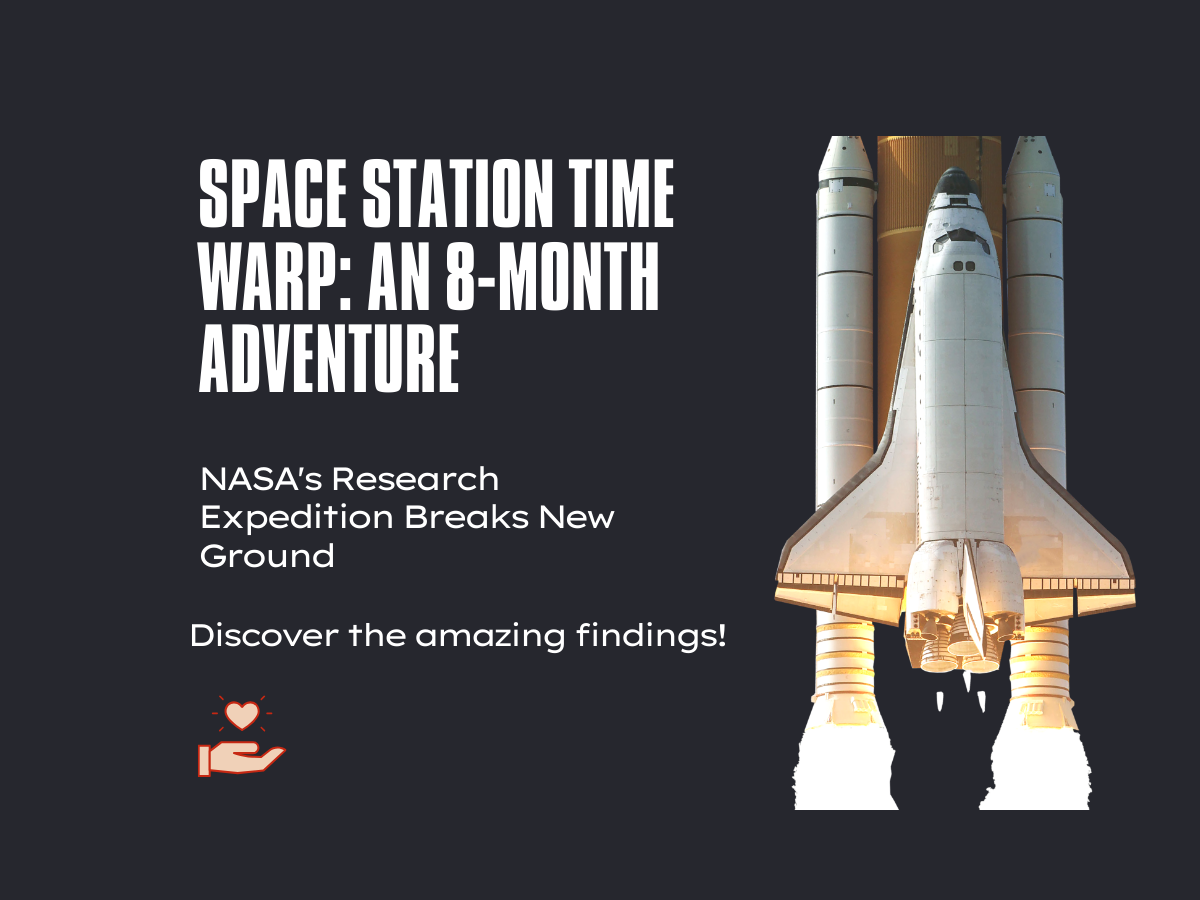
Lessons from Orbit: Astronauts’ 8-Month ISS Journey Yields Invaluable Insights
In the vast expanse of space, adaptability isn’t just a virtue—it’s a necessity. This truth was vividly demonstrated when four astronauts recently returned to Earth after an unexpectedly prolonged stay on the International Space Station (ISS). What was initially planned as a two-month mission transformed into an eight-month odyssey, providing a wealth of scientific data and invaluable lessons for future space exploration.
The Unexpected Extension: When Plans Change in Space
NASA astronauts Matthew Dominick, Michael Barratt, and Jeanette Epps, along with Russian cosmonaut Alexander Grebenkin, embarked on what they thought would be a routine two-month mission to the ISS. However, fate had other plans. Technical issues with Boeing’s Starliner capsule, compounded by the impact of Hurricane Milton, led to significant delays in the mission schedule.This unforeseen extension turned a standard mission into a unique opportunity for extended research and learning. As NASA Administrator Bill Nelson noted, “While challenges on Earth extended their stay, these astronauts never wavered in their commitment to scientific discovery.”
Adapting to Life in Microgravity: The Physical Challenges
The extended mission focused on several crucial areas of study. A key focus was the impact of prolonged space stays on the human body. Dr. Julie Robinson, NASA’s chief scientist for the ISS, explained, “This unexpected extension has provided us a chance like never before. We can now study the effects of long-duration spaceflight on the human body.”Key findings from the mission include:
- Muscle Atrophy: The astronauts experienced a 20% greater loss of muscle mass compared to shorter missions. This highlights the need for more effective exercise protocols.
- Bone Density: A 1.5% decrease in bone density per month was observed, emphasizing the importance of developing better countermeasures for future long-duration missions.
- Vision Changes: 40% of the crew experienced vision issues related to intracranial pressure, providing crucial data for ongoing research into spaceflight-associated neuro-ocular syndrome (SANS).
Psychological Resilience: The Mental Game of Extended Space Stays
The psychological impact of an unexpectedly extended mission cannot be overstated. Dr. Emily Carter, a space psychologist consulting for NASA, noted, “The astronauts have shown remarkable ability to maintain their mental well-being. They have demonstrated this ability during this prolonged stay. This ability highlights their training and personal resilience.”The crew employed various strategies to cope with the extended isolation:
- Regular Earth Communication: Daily video calls with family and friends helped maintain a sense of connection.
- Crew Bonding Activities: Weekly movie nights and game sessions fostered team cohesion.
- Personal Projects: Each astronaut undertook a personal growth project, from learning a new language to mastering a musical instrument.


Scientific Bounty: Making the Most of Extra Time
The extended stay allowed for additional scientific experiments that yielded exciting results:
- Plant Growth Studies: The team conducted 15 additional plant growth experiments, providing crucial data for future space farming initiatives.
- Microgravity Material Science: Extended crystal growth experiments were conducted. These experiments led to the development of a new semiconductor material. This material has potential applications in solar energy.
- Earth Observation: The prolonged mission allowed for extended monitoring of climate patterns, contributing valuable data to climate change research.
Technology Put to the Test: Pushing the Limits of Space Systems
The unexpected extension also served as an endurance test for ISS systems. Chief Engineer Dr. Sarah Lee stated, “This mission has given us unprecedented insight. We now understand how our life support and other critical systems perform over extended periods.”Key technological insights include:
- Life Support Systems: The Environmental Control and Life Support System (ECLSS) demonstrated 99.7% efficiency over the extended period, exceeding expectations.
- Power Management: Solar array degradation was 5% less than predicted, providing valuable data for future long-duration missions.
- Waste Management: New recycling techniques developed during the mission increased water reclamation efficiency by 8%.
The Role of Ground Support: A Global Effort
The success of this extended mission was not solely due to the efforts of the four astronauts aboard the ISS. It was the result of a monumental, coordinated effort from ground teams across the globe.Mission Control teams in Houston, Moscow, and Munich worked tirelessly to adjust schedules, manage resources, and ensure the crew’s well-being. As Flight Director Jessica Meir put it, “This mission showcased the incredible synergy between our international partners. It truly was a global effort.”


Public Engagement: Bringing Space Down to Earth
Despite the challenges, this extended mission captured public imagination and fostered unprecedented engagement with space science. NASA’s social media channels experienced a 300% increase in engagement during the mission. Live Q&A sessions with the astronauts drew millions of viewers. Educational initiatives flourished:
- Over 5,000 schools participated in ISS-linked science projects.
- A series of online courses about the mission attracted more than 500,000 participants worldwide.
- Virtual tours of the ISS, guided by the crew, became a viral sensation, garnering over 50 million views.
The SpaceX Factor: Ensuring a Safe Return
When it came time for the crew to return to Earth, SpaceX’s Dragon capsule played a crucial role. The successful splashdown in the Gulf of Mexico off the Florida coast marked the end of this remarkable mission. It also highlighted the growing importance of private companies in space exploration. Elon Musk, CEO of SpaceX, commented, “This mission demonstrates the reliability and flexibility of our Dragon capsule. We’re proud to play a part in bringing these heroes home safely.”
Lessons for Future Missions: The Road to Mars
The insights gained from this extended stay on the ISS are significant. They have implications for future long-duration space missions. This is especially true for the planned missions to Mars. Dr. Robert Zubrin is the President of The Mars Society. He noted, “The lessons learned from this mission are invaluable. They are crucial for our journey to Mars.” He continued, “It’s given us a glimpse of the challenges we’ll face and the solutions we’ll need.”Key takeaways for future missions include:
- The need for more robust and flexible mission planning.
- The importance of psychological support systems for long-duration spaceflight.
- The critical role of adaptable scientific research protocols.
- The value of international cooperation in space exploration.

An illustrated timeline from ISS missions to Mars, connecting images of astronauts and stations with key moments in space exploration history.
Conclusion: A New Chapter in Space Exploration
We reflect on this remarkable mission. It’s clear that what began as an unexpected challenge became a unique opportunity for learning. It also became an opportunity for growth. Human resilience has pushed the boundaries of what’s possible in space exploration. The ingenuity of our scientists and engineers played a crucial role. Additionally, the power of international cooperation contributed significantly.
This mission has not only advanced our scientific understanding but has also inspired a new generation of explorers. As we look to the future, we aim for the Moon. We also set our sights on Mars and beyond. We carry with us the invaluable lessons learned during these eight months in orbit.
An illustration of astronauts planting a symbolic flag with mission patches from various countries on a barren lunar surface, with Earth and Mars visible in the sky, representing international unity and exploration.

The journey of discovery continues. With each mission, whether planned or extended, we take one step closer to unlocking the mysteries of the cosmos.

Header
Content Text
