
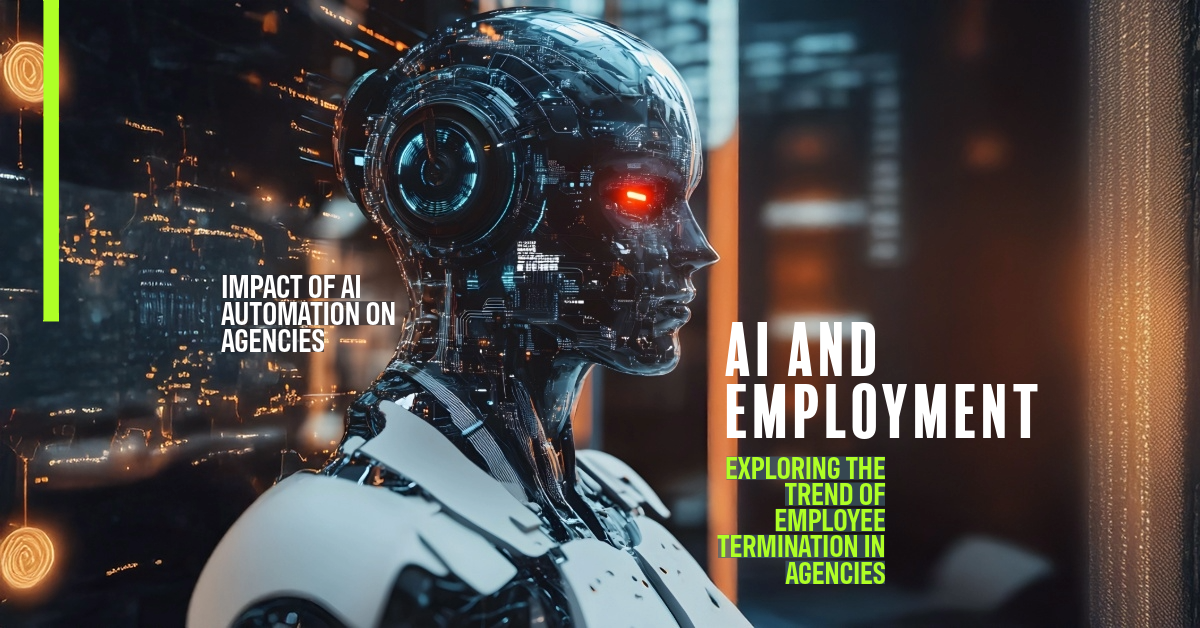
The Silent Revolution: How Technology Is Reshaping Marketing Careers Worldwide
The advertising industry stands at a crossroads that few saw coming just five years ago. National job markets celebrate growth with hundreds of thousands of new positions added monthly. Meanwhile, marketing agencies worldwide face an unprecedented transformation. This change threatens traditional employment models. This shift is more than cyclical downsizing. It signals a fundamental reimagining of how marketing work gets done. In an age where artificial intelligence can craft campaigns, AI can analyze consumer behavior. It can execute strategies once requiring entire teams.

Infographic showing predicted workplace disruption by AI and automation: 73% of executives foresee industry upheaval, 1 in 5 jobs replaced, and 42% of skills changing soon
The Anatomy of Industry Transformation
Automation’s Expanding Footprint
The integration of artificial intelligence into daily marketing operations has moved beyond experimental phases into mainstream adoption. Research shows that over two-thirds of agency employees now use AI tools multiple times weekly. This change fundamentally alters workflow dynamics across the industry. This technological integration covers a broad range. It includes media buying improvement and content creation. Functions that once required extensive human intervention are now AI-assisted processes.

ere’s a powerful line that fits the theme and intensity of your poster:
“In the age of disruption, only the agile thrive — transform, or be left behind.”
Would you like more options with a poetic, motivational, or business-driven tone?
Marketing automation has evolved from simple email scheduling to sophisticated systems. These systems are capable of customer segmentation, personalized campaign execution, and real-time performance improvement. The efficiency gains are undeniable—productivity improvements of up to 40% in marketing teams leveraging AI show the technology’s transformative potential. Still, these improvements come with workforce implications that extend far beyond simple task automation.
The ripple effects of this transformation are particularly clear in data-heavy roles. Traditional market researchers and analysts face significant disruption. Large language models can now do complex data analysis tasks exponentially faster than human counterparts. Tasks that once required teams of analysts working for days can now be accomplished through AI systems in just hours. This fundamentally questions the value proposition of certain specialized roles.
Economic Pressures Driving Change
Beyond technological factors, economic headwinds have accelerated workforce reduction strategies across the advertising sector. The industry has experienced approximately 150,000 job cuts across more than 525 companies through 2024. Hardware and electronics manufacturers have seen the most significant impact. These reductions show broader economic pressures. These include inflation concerns, geopolitical instability, and shifting consumer spending patterns. These pressures have forced agencies to reconsider their operational models.

Global advertising agency employment has declined significantly from 2020 to 2024, with India and the US experiencing similar downward trends as AI automation and industry consolidation reshape the workforce
The merger between major holding companies illustrates this consolidation trend. Industry giants are pursuing aggressive acquisition strategies, with deals like the $13 billion merger creating the world’s largest advertising firm. These consolidations aim to achieve operational scale and service breadth. Yet, they inevitably result in workforce redundancy. Overlapping functions are eliminated to achieve promised cost savings.
Media industry layoffs have been particularly pronounced. In India alone, between 400 and 600 media personnel were laid off during 2024. This pattern reflects global trends. Traditional media companies struggle with declining advertisement revenues. They also face the need for cost rationalization in increasingly competitive markets.
Geographic Variations in Industry Impact
The Indian Market Transformation
India’s advertising landscape presents a unique case study in industry evolution. The country is one of the world’s fastest-growing digital markets with over 700 million internet users. Nonetheless, it has not been immune to workforce disruptions. The Indian media industry has experienced significant layoffs affecting print. Television and digital news media are also affected. Financial considerations and AI adoption are driving these changes.
Nonetheless, India’s story is more complex than simple job losses. The country’s digital marketing sector is projected to reach $160 billion by 2025. Goldman Sachs research indicates that the industry will generate over 900,000 jobs. This growth signifies a fundamental shift in skill requirements. It indicates a shift rather than overall employment decline. The demand is concentrating on AI-literate professionals who are capable of leveraging advanced marketing technologies.
The salary landscape in India reflects this transformation. AI Marketing Specialists, a role that barely existed in 2020, now command salaries of 15.8 LPA, while traditional roles like Digital Marketing Executives have seen more modest growth.
marketing_salary_trends_india.csv
| Role | 2020_Salary_India_LPA | 2024_Salary_India_LPA | Growth_% |
|---|---|---|---|
| Digital Marketing Executive | 3.5 | 4.2 | 20 |
| SEO Specialist | 4.2 | 5.8 | 38 |
| Social Media Manager | 3.8 | 4.5 | 18 |
| Content Marketing Manager | 5.5 | 6.8 | 24 |
| PPC Specialist | 4.8 | 6.2 | 29 |
| Marketing Analytics Manager | 8.5 | 12.5 | 47 |
| AI Marketing Specialist | 0.0 | 15.8 | 0 |
| Growth Marketing Manager | 7.2 | 14.5 | 101 |
This disparity illustrates how technological fluency directly translates to earning potential in the evolving market.
Global Employment Patterns
Internationally, the pattern of job displacement varies significantly by region and specialization. The United States has experienced tech layoffs. These layoffs have reached their highest levels since the Dot Com Bubble. Silicon Valley companies have been particularly affected by AI-driven restructuring. European markets face similar challenges, with agencies consolidating operations to achieve economies of scale necessary for competing with technology giants.
The nature of displacement has evolved beyond simple entry-level reductions. Data from Live Data Technologies shows that manager-level layoffs rose to 31.54% in 2023, with executive layoffs climbing to 14.72%—both representing six-year highs. This shift indicates that AI’s impact extends beyond routine tasks into strategic and supervisory functions, fundamentally reshaping organizational hierarchies.

A sparsely occupied office with many empty desks, illustrating reduced staffing in modern workplaces
Skills Evolution and Career Adaptation
The New Professional Competencies
The marketing professionals surviving and thriving in this transformed landscape have distinctly different skill sets than their predecessors. The 2025 AMA Marketing Skills Report identifies critical competency gaps in digital marketing, data analytics, and AI literacy. These gaps represent opportunities for professionals willing to invest in skill development aligned with industry evolution.
Successful modern marketers show skill in AI prompt engineering, advanced analytics interpretation, and marketing automation platforms.
ai_impact_marketing_jobs.csv
| Marketing Role | AI Replacement Risk | Risk Percentage | Future Skills Required |
|---|---|---|---|
| Junior Copywriter | High | 85 | AI prompt engineering, Content strategy |
| Data Analyst | High | 80 | AI model interpretation, Advanced analytics |
| Social Media Coordinator | Medium | 60 | AI-assisted content creation, Community management |
| Email Marketing Specialist | High | 75 | Marketing automation, Personalization |
| SEO Specialist | Medium | 55 | Technical SEO, AI optimization |
| Digital Marketing Manager | Low | 25 | AI strategy, Team leadership |
| Creative Director | Low | 15 | Human-centered design, Innovation |
| Brand Strategist | Low | 20 | Strategic thinking, Brand psychology |
| Customer Experience Manager | Low | 30 | Emotional intelligence, Customer journey mapping |
| Marketing Analytics Manager | Medium | 45 | AI ethics, Data governance |
Yet, technical skills alone prove insufficient. The highest-value professionals achieve success by combining technological fluency with uniquely human capabilities. These include creative strategy, emotional intelligence, and complex problem-solving that AI can’t replicate.
Communication and innovation skills stay paramount, with agencies specifically seeking professionals who can explain technical concepts to non-technical stakeholders. This need reflects the increasing complexity of marketing technology stacks. There is a need for professionals who can bridge technical capabilities with business objectives.
Strategic Career Positioning
Career resilience in the current environment requires strategic positioning around AI augmentation rather than competition. Marketers who integrate AI tools into their workflows are replacing those who resist technological adoption. This dynamic creates opportunities for professionals who view AI as an enabling technology rather than a threat to their skill.
The most secure roles involve strategic thinking, creative direction, and customer relationship management—functions requiring human judgment and emotional intelligence. Brand strategists, creative directors, and customer experience managers face the lowest AI replacement risk at 15-30%. In contrast, data analysts and junior copywriters face significantly higher vulnerability at 80-85% replacement risk.

Different marketing roles face varying levels of AI replacement risk, with junior positions and data-heavy roles most vulnerable to automation
Professional development now requires continuous learning orientation. 43% of marketing professionals find generative AI as the most important future skill. This statistic underscores the imperative for ongoing education and adaptation as technological capabilities continue expanding.
Industry Structure and Future Outlook
Consolidation and Competitive Dynamics
The advertising industry’s response to technological and economic pressures has primarily involved consolidation strategies designed to achieve competitive scale. Major agency mergers aim to create integrated service offerings. These services can compete with technology giants like Google and Amazon. Their advertising divisions generate revenues that dwarf traditional agencies.
This consolidation creates a bifurcated market structure. On one end are large, technology-enabled service providers. On the other are nimble, specialized boutique agencies. Mid-sized agencies face particular pressure to either scale significantly or focus on specialized niches to stay competitive. This “shrinking middle” phenomenon forces strategic decisions about growth direction and service positioning.
The emergence of in-house marketing teams, specialist agencies, and offshore production capabilities has reduced dependence on traditional agency models. Brands increasingly build internal capabilities for functions formerly outsourced. This shift further pressures agency employment levels. It forces service providers to show unique value propositions.
Technology Integration and Human Roles
The relationship between AI and human workers continues evolving beyond simple replacement models toward collaborative frameworks. AI excels at data processing, pattern recognition, and routine task automation. Humans offer creative insight, strategic judgment, and emotional intelligence. Successful organizations are designing workflows that leverage both capabilities optimally.
Nonetheless, this collaboration requires significant investment in training and change management. Organizations report difficulties finding AI-skilled talent, with 75% of employers struggling to find qualified candidates. This talent shortage creates opportunities for professionals who proactively develop AI competencies. It also highlights the challenge of workforce transition at scale.
The future marketing organization resembles a hybrid model. AI handles data analysis, content generation, and campaign improvement. Humans focus on strategy, creativity, and relationship management. This division requires new organizational structures and compensation models that appropriately value human contributions in an increasingly automated environment.
Regional Market Adaptations
Indian Market Dynamics
India’s unique position as both a major outsourcing destination and rapidly growing domestic market creates distinct adaptation challenges and opportunities. The country’s digital marketing industry is growing at a 27.42% CAGR, driven by increasing internet penetration and business digitization. This growth masks underlying employment volatility as roles transition from traditional to AI-enabled functions.
Indian agencies face particular pressure from cost-conscious clients demanding efficiency improvements while competing with global service providers leveraging advanced automation. The response has involved strategic repositioning toward high-value services. These services need cultural insight and local market knowledge. International competitors can’t easily replicate them.
Educational institutions in India are adapting curricula to include AI literacy, data analytics, and digital marketing automation as core competencies. This educational evolution aims to prepare graduates for the evolving job market. It also highlights the skills gap facing current professionals. They must retrain to stay relevant.
Global Competition and Specialization
The international advertising market increasingly rewards specialization and technological sophistication. Agencies focusing on specific verticals or advanced technical capabilities are better positioned than generalist providers competing primarily on cost. This specialization trend creates opportunities for professionals with deep domain skill merged with technological fluency.
Geographic arbitrage was once a significant factor in agency choice. It becomes less relevant now as AI automation reduces the importance of labor cost differentials. Instead, clients favor partners who can show technological capabilities, industry skill, and strategic insight regardless of location.
The rise of remote work capabilities and digital collaboration tools has further flattened geographic advantages. Agencies worldwide now compete on merit rather than location. This leveling effect creates opportunities for talented professionals regardless of geography but also intensifies competition across traditional market boundaries.
Future Skills and Career Strategies
Emerging Professional Requirements
The marketing professionals most to succeed in the AI-augmented landscape have combinations of technical skill and uniquely human capabilities. Strategic thinking, creative problem-solving, and emotional intelligence become differentiating factors as routine analytical tasks become automated.
Technical requirements increasingly include understanding of AI model capabilities and limitations, data privacy regulations, and marketing automation platforms. Yet, the most valuable professionals also have the ability to interpret AI outputs within business contexts. They make strategic decisions based on the merger of human judgment and algorithmic insights.
Cross-functional collaboration skills gain importance as marketing technology stacks become more integrated and complex. Professionals who can work effectively with data scientists, technologists, and creative teams are invaluable. They offer unique value in organizations struggling to integrate diverse technical capabilities.
Professional Development Strategies
Career resilience requires proactive skill development focused on areas where human knowledge remains superior to AI capabilities. Continuous learning orientation, adaptability, and strategic thinking represent investable skills that compound over time.
The most effective development strategies combine technical training with business acumen and creative capabilities. Professionals who understand AI tools and keep focus on customer insights. They also focus on business objectives. These professionals position themselves as valuable strategic resources rather than replaceable technical specialists.
Why are ad agency jobs disappearing?
Building personal brands and professional networks becomes increasingly important as traditional career advancement paths evolve. Demonstrating unique value propositions is crucial for career security. Maintaining professional relationships is also important in an environment where organizational loyalty offers limited protection.
Conclusion: Navigating the Transformation
The disappearance of traditional advertising agency jobs is not a temporary disruption. It is not a total industry collapse either. Instead, it is a fundamental transformation that requires strategic adaptation. The most successful professionals and organizations are those embracing technological capabilities. They focus on uniquely human contributions that AI can’t replicate.
Navigating the AI Automation Wave
AI is no longer a future trend—it is the present force reshaping how marketing and advertising agencies operate. While automation offers cost efficiency and productivity, it also brings significant disruption to traditional job roles. Agencies that fail to adapt risk being left behind.
Action Plan for Agencies & Professionals
- Audit Current Operations
Identify repetitive and manual tasks ripe for automation. - Upskill Your Workforce
Invest in AI, data analytics, and prompt engineering training for your team. - Redefine Roles, Don’t Just Reduce
Transition talent into strategy, creativity, and AI oversight roles. - Integrate AI Tools Gradually
Use AI for campaign testing, A/B analysis, customer support, and content generation. - Monitor ROI and Efficiency Gains
Measure how AI impacts cost reduction and output to guide further implementation. - Communicate Change Transparently
Keep teams informed and involved to reduce resistance and improve adoption. - Plan for Human-AI Collaboration
Shift mindset from “AI replacing jobs” to “AI enhancing roles.”
Embrace the shift, lead the change. The future belongs to those who evolve with intelligence—human and artificial.

This transformation creates both challenges and opportunities. Routine tasks become automated. Certain roles face obsolescence. New positions emerge requiring combinations of technical skill and human insight. Success in one’s career depends on positioning oneself at the intersection of technological ability and human creativity. Use AI as a tool for enhanced effectiveness. Do not view it as a competitive threat.
For professionals presently working in marketing and advertising, the imperative is clear: Invest in skills that complement AI. Do not compete with the technology. Focus on strategic and creative capabilities. Keep adaptability as the industry continues evolving. The future belongs to professionals who can navigate this technological transformation. They must also preserve the human elements that drive meaningful brand connections. These elements are essential for business growth.
The advertising industry’s evolution reflects broader changes in how knowledge work gets accomplished in an AI-enabled world. By understanding these dynamics, marketing professionals can adapt strategically. They can not only survive but also thrive in the transformed landscape that is already emerging around us.
